

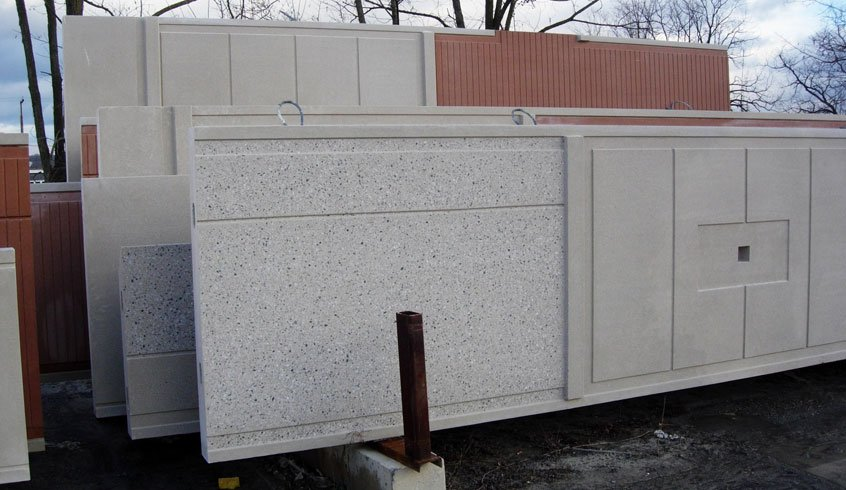
Precast offers a more controlled path. By moving major scope offsite and delivering ready-to-install components, it can reduce trade stacking, simplify sequencing, and tighten coordination across the build. The value shows up in fewer handoffs, fewer downstream fixes, and a job that stays manageable even under pressure.
Build Faster With Fewer Headaches
Precast isn’t just a material choice. It’s a construction approach that can reduce the number of trades, handoffs, and weather-dependent steps happening in the field. When it’s planned with intention, it directly targets the issues that slow projects down and drive rework.
Trade Stacking & Jobsite Congestion
Crowded sites kill momentum. Crews spend time working around each other, staging gets chaotic, lifts get delayed, and access becomes a daily problem. The biggest jobs don’t fail because work is hard. They fail because the site becomes a bottleneck.
Precast helps reduce the amount that needs to be built in place. Instead of multiple trades building layer after layer, the jobsite effort shifts toward setting and tying in larger components with a clear pick plan and sequence. PCI Midwest notes that once foundations are ready, precast can be installed at an average rate of 20–30 pieces (or more) per day for each crew and crane.1 That kind of pace is hard to match with field-built assemblies when trades are stacked and space is limited.
Schedule Creep & Missed Milestones
Schedules rarely blow up all at once. They slip a day here, two days there, then the project is chasing its own tail. Weather events, labor gaps, and late decisions make recovery harder because everything is already stacked on the critical path.
Offsite approaches are often used specifically to fight that creep. McKinsey points to a track record of modular projects accelerating timelines by 20–50% by shifting labor offsite and compressing onsite activities.2 Precast fits the same logic when it’s used to reduce field duration and simplify the path to dry-in.
It’s best to identify which milestones matter most (enclosure, dried-in conditions, interior rough-in start), then work backward to sequence the precast scope so it protects those dates instead of competing with them.
Budget Surprises & Change Orders
Budget pain usually arrives late, when there’s the least room to absorb it. Gaps in scope, late coordination, and field fixes turn into change orders and schedule hits. Even when the dollar amount looks “small,” the ripple effect is real because it pulls supervision, trades, and equipment off planned work.
Rework is a measurable part of that problem. According to the American Society of Civil Engineers, precompletion field rework averaged 0.38% of contract value, and when postcompletion corrections were included, the average rose to 0.76% (with a wide range).3
Precast helps reduce conditions that lead to rework by limiting field-built complexity and requiring earlier alignment of interfaces. The key is treating transitions, embeds, and connection responsibility as budget items, not “coordination later” items.
Quality Variation & Punch Lists That Drag On
Field conditions change daily. Crews change. Access changes. That variability shows up in tolerances, finishes, and weather-related damage, and it often becomes a punch list that refuses to die.
Precast introduces repeatability because components are produced in controlled conditions, with consistent processes and inspection points. It doesn’t eliminate punch lists, but it can reduce the number of variables that usually create them, especially on exterior scope, where exposure and access make fixes expensive.
Weather Exposure & Site Risk
The longer a project stays open to the elements, the more vulnerable it becomes. Weather delays, temporary protection, wet materials, and stop-start progress create drag, and the risk compounds as schedules compress.
Precast can shorten exposure windows by accelerating enclosure and reducing the number of weather-dependent field operations. The practical advantage is less time spent protecting work and more time installing work that moves the project forward.
Too Many Handoffs & Unclear Responsibility
Projects get messy when responsibility is fragmented. If interfaces aren’t owned, the gaps show up as RFIs, redesigns, and field fixes. Most teams have lived the same pattern: “It’s not in my scope,” followed by a schedule hit anyway.
Precast performs best when it’s treated as a planned system with clear interface decisions early. Panelization, openings, embeds, tolerances, and connection intent need to be aligned before the job depends on them. That’s what turns precast into a simplifier instead of another coordination problem.
The Multiplier: Early Alignment & Clear Ownership
Precast delivers the biggest payoff when it’s treated like a building system, not a late substitution. The speed, predictability, and cleaner coordination everyone wants only show up when key decisions are made early enough to influence detailing, sequencing, and logistics.
Most projects don’t struggle because precast is complicated. They struggle because the interfaces are. Slab edges, window openings, embeds, waterproofing transitions, and attachment points live in the gaps between scopes. If those gaps stay fuzzy, the job pays for it in RFIs, field fixes, and slowdowns that hit at exactly the wrong time.
Early alignment is how teams avoid that.
Here’s what it looks like when it’s done well:
- Define scope boundaries early. Confirm what’s included, what’s excluded, and who owns each interface. If it touches two systems, someone needs to own the decision.
- Lock the “pain points” first. Openings, edges, transitions, and connection intent should be prioritized ahead of less critical refinements. Those are the areas where late changes cost the most.
- Coordinate around the install sequence. Panelization and erection order aren’t just structural decisions. They affect access, staging, safety planning, and follow-on trades.
- Treat logistics like design. Crane access, trucking routes, laydown space, and pick paths need to be planned early, not discovered later.
- Set an approval timeline that protects the schedule. Submittals, selections, and long-lead decisions are schedule drivers. If they slip, everything else compresses.
When those pieces are in place, precast stops feeling like another coordination variable and starts doing what it’s supposed to do: reduce complexity, keep the job moving, and limit the downstream surprises that turn into headaches.
Simplify Your Next Build With Precast
Precast works best when it’s planned as a system, not added late as a patch. When scope boundaries, interfaces, and sequencing are aligned early, the job gets simpler. Fewer moving parts stay in the field, handoffs get cleaner, and the schedule is easier to protect when conditions tighten.
Architectural Precast Innovations, Inc. (API) partners with owners, architects, and contractors to make that approach work in the real world. Design-assist support, clear budget guidance, and coordination that reflects how jobs are actually built all help reduce risk and keep projects moving.
Ready to take pressure off your next project? Get in touch to talk through where precast makes the most sense and how to plan it early.
References
- https://www.pci.org/PCI_Docs/PCI_Midwest_Docs/Precast-Focus/2023/Accelerated%20Project%20Schedules%20with%20Precast%20Concrete.pdf
- https://www.mckinsey.com/~/media/McKinsey/Business%20Functions/Operations/Our%20Insights/Modular%20construction%20from%20projects%20to%20products%20NEW/Modular-construction-from-projects-to-products-full-report-NEW.pdf